Plastering a Victorian Terrace: What to Expect
Planning to replaster a Victorian terrace in London? Our family-run team explains what makes period homes different and how we approach the work.

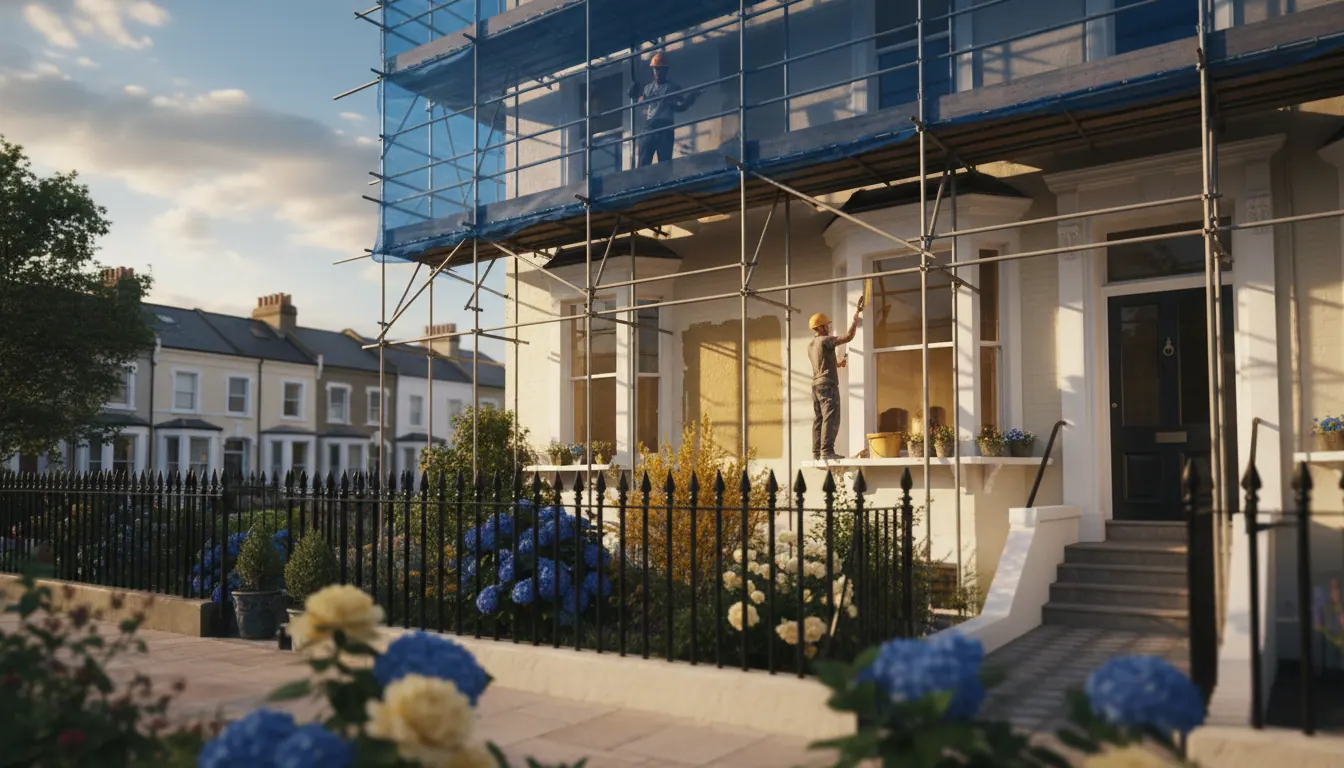
Why Victorian terraces need a different approach to plastering
London is full of Victorian terraces. Walk down almost any residential street in the city and you will see the same familiar features: bay windows, high ceilings, cornices, chimney breasts in several rooms. These houses were built to last, and many of them have, but their walls and ceilings tell the story of well over a century of use.
The original plaster in a Victorian terrace is often lime-based. It was applied in multiple coats directly onto timber laths or brick, and it behaves differently from the gypsum plaster used in modern homes. It flexes slightly with the building and it breathes. When it is in good condition, it is worth keeping. When it is failing, you need to understand what you are dealing with before you start.
Our plastering service covers a wide range of plastering work across London. This guide explains what is worth knowing before you plaster a Victorian terrace.
The condition of original plaster: keep it or replace it?
The first question on any Victorian terrace job is: what is actually here, and what state is it in?
Original plaster that is still sound, still bonded to the wall and just tired on the surface can often be given a fresh skim coat. That is the most straightforward outcome. You keep the character of the original surface and get a smooth, clean finish ready for decorating.
But plaster that has lost its key (the bond between the plaster and the lath or masonry behind it) is a different matter. You will notice it when you press gently on the wall and it feels hollow or moves. In that case, the right thing is usually to take it back and start again properly.
Signs that original plaster may need replacing:
- Large hollow-sounding areas when you tap the wall
- Plaster that has pulled away from the lath in patches
- Deep diagonal cracking, often at corners or above doorways, that follows movement in the building
- Damp that has got behind the plaster and broken the bond
- Previous patch repairs that have shrunk and pulled away
London's weather plays a part here too. These houses have been through a great many wet winters, and damp can work its way into walls over decades. A house that has not been well maintained, or one that has had windows replaced without proper attention to the reveals, can have more plaster damage than it first appears.
Lime or gypsum: which plaster suits a Victorian terrace?
This question comes up on almost every period home, and the honest answer is: it depends on the wall.
Lime plaster is vapour-permeable. It lets moisture move through the wall rather than trapping it. On solid brick walls, which most Victorian terraces have, that breathability matters. If you seal a solid brick wall with a non-breathable material, moisture can build up behind it and cause problems over time.
Gypsum plaster is widely used for internal walls and for skim coats over existing plaster in good condition. It dries relatively quickly and gives an excellent finish.
The key point is that the two systems should not be mixed without understanding what is behind the wall. Applying gypsum over damp lime, or using a non-breathable finish on a solid external wall, can cause issues further down the line. If you are unsure what suits your walls, get in touch with details of the property and we will talk it through.
Chimney breasts, cornices and ceiling roses
Victorian terraces have features that modern houses do not: chimney breasts in the front and back rooms, cornices running around the ceiling, ceiling roses where a light fitting sits. These are part of what makes the house.
When a room is being replastered, it matters to take care around these features. Where a cornice is intact and in good condition, the plasterer should work to it rather than over it. Reinstating damaged or missing decorative plasterwork is specialist heritage work and is not something we list as a service, so it is worth asking whoever you speak to exactly what they cover.
If your property is in a conservation area or is listed, there may be restrictions on materials and methods. It is always worth checking with your local council before starting work on original fabric.
What a proper skim finish looks like, and how long before you can paint
A good skim coat on a Victorian terrace wall should be flat, smooth and free from tool marks, ridges or hollows. In a room with high ceilings and good raking light (the kind you get on a bright morning when the sun catches the wall at an angle) a poor finish shows up immediately.
New plaster needs time to dry before you paint it. The exact time depends on the thickness of the coat, the product used, the temperature in the room and how well ventilated the space is. As a general rule, fresh plaster needs to be fully dry before any emulsion goes on. Paint applied too early traps moisture and can lead to peeling or patchy results later. Always follow the guidance for the specific product used, and do not rush this stage.
Replastering room by room, or all at once?
Many London homeowners tackle a Victorian terrace gradually, one room at a time. That is practical, and there are a few things worth thinking about:
- If the ceilings are in poor condition throughout, it can make sense to do them together before you redecorate, rather than room by room
- Chimney breasts often have similar issues across all floors of the house, so addressing them together can be more efficient
- If you are planning to replaster before selling or letting, doing the main living spaces together gives a consistent finish
Every job is different, so we quote each one individually once we understand the scope.
Frequently asked questions
Why does plaster crack in Victorian terraces more than in newer houses?
Victorian terraces move. All buildings do, but a 130-year-old house on shallow foundations has had a long time to settle and respond to London's clay soil and the seasons. Diagonal cracks from the corners of windows and doors, and fine hairline cracking across large plaster surfaces, are common. Some cracking is cosmetic and can be addressed with a fresh skim. Wider, recurring cracks may point to ongoing movement and are worth investigating before replastering over them.
Can you replaster just one wall or one room?
Single rooms and individual walls are a normal scope of work. If the plaster in the rest of the house is sound, there is no need to disturb it.
Is it worth keeping the original plaster in a Victorian terrace?
Where the original plaster is still bonded and in reasonable condition, it is generally worth keeping. A good skim coat over sound original plaster is a straightforward job, and removing plaster that is still doing its job creates more work and more mess than necessary.
How do I prepare for a plastering job?
Clear the room as much as possible, protect floors, and cover any furniture that cannot be moved. Fittings, switches and sockets that are being moved should be dealt with by the relevant trades first. If there is damp that has not been addressed, it needs sorting before new plaster goes on.
Talk to us about your Victorian terrace in London
Plastering a Victorian terrace in London takes an understanding of what these buildings are made of and how they behave. We are a family run team with over 65 years' experience in the building industry, and all our work is guaranteed. Read more about us, and if you have a period home in London and are thinking about replastering, we would be glad to talk it through.
Get in touch with us, call 07906 267470 or email Ateamservices38@gmail.com.